
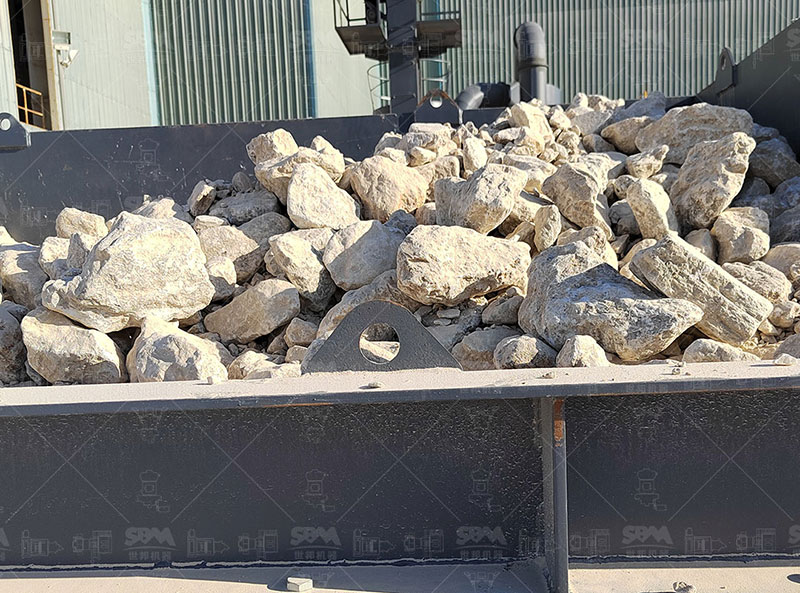
Limestone powder with a fineness of 325 mesh is widely used in industries such as flue gas desulfurization, construction materials, and fillers. If you are planning to produce 325 mesh limestone powder, choosing the right grinding process and equipment is essential.
In this guide, we will explain the complete limestone grinding process, suitable equipment, and key factors that affect production efficiency.
What Does 325 Mesh Limestone Mean?
325 mesh means that the limestone powder particles can pass through a sieve with 325 openings per inch. This fineness is commonly required in applications like flue gas desulfurization (FGD), cement additives, and calcium carbonate production.
Limestone Grinding Process (Step-by-Step)
1. Crushing
Large limestone rocks are first crushed into smaller particles (usually below 20–30 mm) using a jaw crusher or hammer crusher.
2. Grinding
The crushed material is fed into a grinding mill, where it is processed into fine powder. This is the most critical step in achieving 325 mesh fineness.
3. Classification
A classifier separates qualified powder (325 mesh) from coarse particles. Oversized material is returned to the mill for regrinding.
4. Powder Collection
Finished powder is collected using a dust collector or cyclone system, ensuring high efficiency and environmental compliance.
Best Equipment for 325 Mesh Limestone Grinding
1. Raymond Mill
The Raymond mill is one of the most commonly used machines for producing 325 mesh limestone powder.
- Suitable fineness: up to 325 mesh
- Advantages: low investment, stable operation
- Best for small to medium capacity projects
2. Vertical Roller Mill (VRM)
For larger production capacities, a vertical roller mill is a better choice.
- Capacity: high (10–50 TPH)
- Energy-efficient and automated
- Suitable for continuous industrial production
3. Ultrafine Grinding Mill
If you plan to produce finer powders (above 400 mesh), ultrafine mills are recommended.
Key Factors Affecting Grinding Efficiency
1. Raw Material Hardness
Limestone typically has a Mohs hardness of 3, which makes it relatively easy to grind. However, variations in composition can affect performance.
2. Moisture Content
High moisture (>6%) can reduce grinding efficiency. Drying may be required before grinding.
3. Equipment Selection
Choosing the right mill type directly impacts production cost and output quality.
4. Classifier Accuracy
A high-precision classifier ensures consistent 325 mesh output.
How Much Does a 325 Mesh Limestone Plant Cost?
The cost of a limestone grinding plant depends on several factors:
- Capacity (TPH)
- Fineness requirements
- Equipment type
- Automation level
Generally, a small to medium plant can range from tens of thousands to several hundred thousand USD.
Applications of 325 Mesh Limestone Powder
- Flue Gas Desulfurization (FGD)
- Cement and construction materials
- Calcium carbonate fillers
- Paint and coating industry
FAQ
What is the best mill for 325 mesh limestone?
The Raymond mill is the most cost-effective choice, while vertical roller mills are better for large-scale production.
Can one plant produce different mesh sizes?
Yes, by adjusting the classifier, you can produce different fineness levels.
Is limestone grinding profitable?
Yes, especially in regions with strong demand for construction and environmental applications.
Need a Limestone Grinding Solution?
Get a free customized plant design and price quote from our engineers.
Get Free Solution →